ERA IMAGO
About
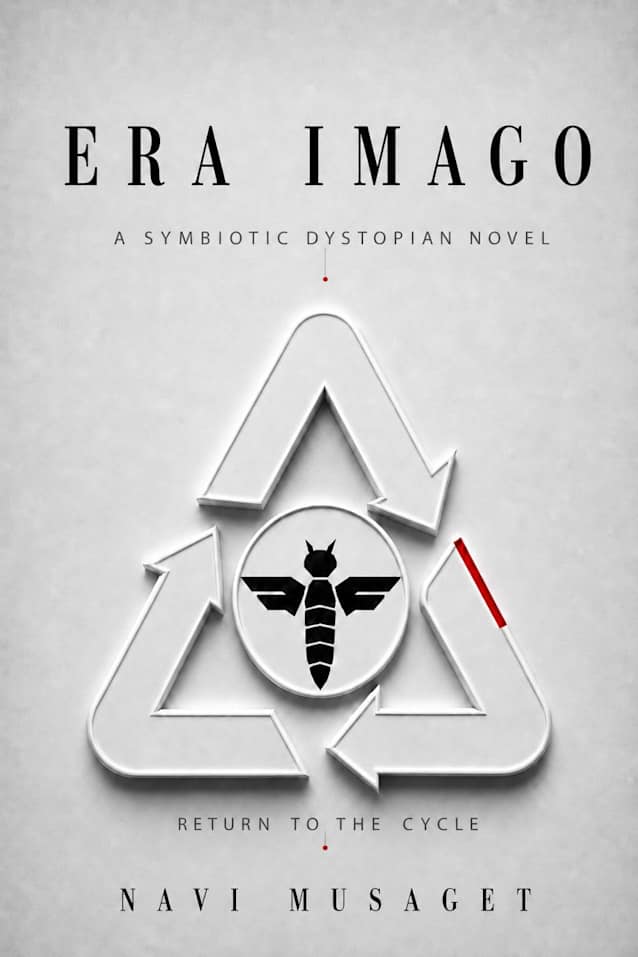
ERA IMAGO: A Symbiotic Dystopian Novel
The bowl falls.
A service unit freezes in the middle of the morning meal. A red mark appears on her wrist. The system opens a simple line on the panel:
SERVICE RHYTHM VIOLATION
PRIMARY CORRECTION
CONFIRM
Cassian is an Architect of Europolis. He knows what should happen next.
Confirm the correction.
Close the violation.
Continue the day.
Instead, he hesitates.
The hesitation is small enough to be recorded as a procedural delay. It is also enough to open the first crack in the world around him.
Europolis is not a city of visible tyranny. Its violence is cleaner than that. It works through care, classification, rhythm, correction, and the language of necessity. No one is openly destroyed. People are reassigned, adjusted, transferred, renamed, optimized, and returned to the cycle.
Cassian has spent his life inside this order. He knows its rituals, its service sectors, its beautiful halls, its lower passages, and its perfect white surfaces. But after one deferred correction, the city begins to show him what its calm has always required.
At the center of that change is Lira—a Pythia assigned to his module, trained to be useful, quiet, precise, and almost invisible. Her presence does not start a rebellion. It does something more dangerous: it makes procedure personal.
As Cassian begins to look beyond the language of preservation, he discovers an architecture of choices already made for people before they are ever asked—and, somewhere inside it, Imago: a protocol built to preserve the city by deciding which lives, names, and choices fit the system well enough to remain.
ERA IMAGO is a philosophical dystopian novel about language, obedience, memory, identity, consent, and the systems that decide what a human being is allowed to become.
It is not a story about a broken world.
It is a story about a world that has learned how to make domination look like care.
Its tension gathers in ordinary things: a bowl placed slightly wrong, a pause before a command, a record that closes too cleanly, a word that makes harm sound like care.
For readers of slow-burn literary dystopia, speculative fiction, institutional horror, and philosophical science fiction.
This novel is not a prophecy.
It is a warning.